A Single Nucleotide Deletion During DNA Replication
Learn how a single nucleotide deletion during dna replication can change codons in a coding region, when the frame is preserved, and a worked example.
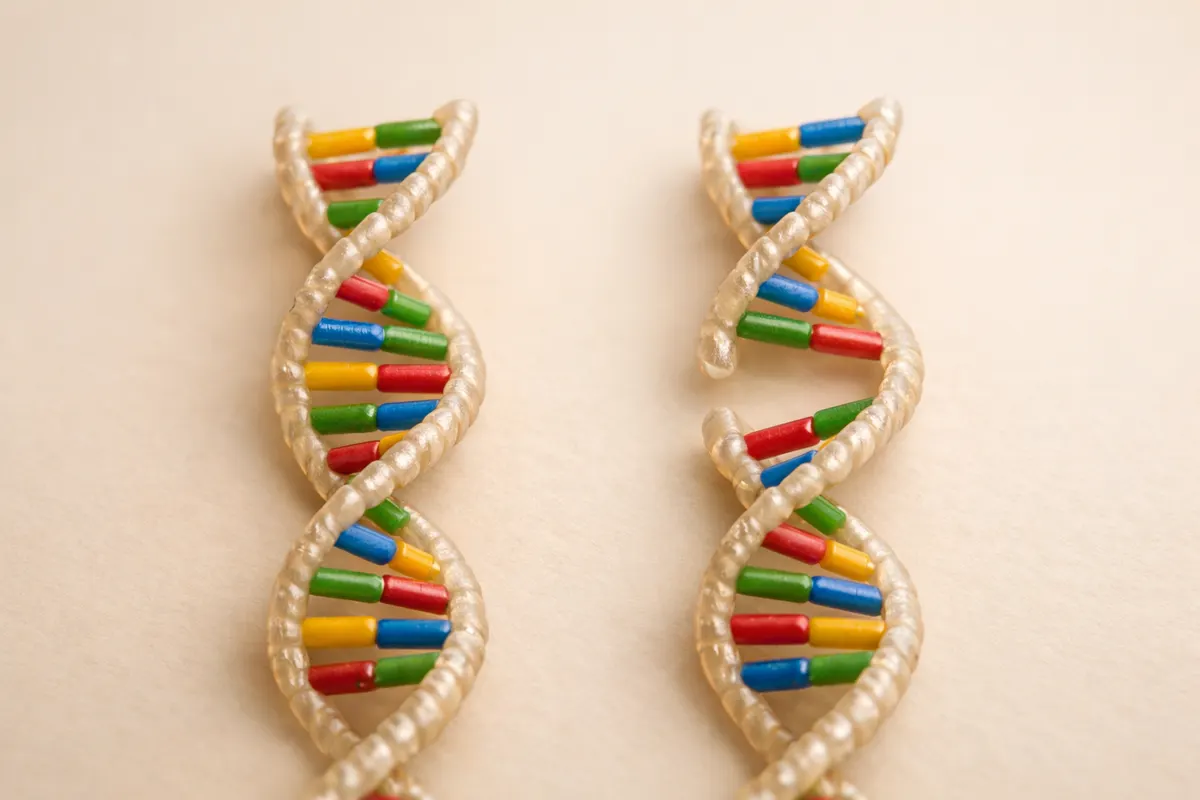
Quick answer: what a single-base deletion does
A single nucleotide deletion during dna replication removes one base from the DNA sequence and can change the way downstream bases are grouped into codons if it happens inside a translated coding region. That regrouping is called a frameshift: removing one base shifts every subsequent triplet, usually changing the amino acids made from that point onward.
A deletion outside the translated coding sequence does not directly regroup translated codons, although changes to splicing or regulation can still matter. Within a coding sequence, deleting a multiple of three bases preserves the downstream reading frame. If the deletion crosses codon boundaries, it can also change the amino acid encoded at the join.
Short answer for students: inside a coding sequence a one-base deletion typically shifts the frame and alters the amino-acid sequence after the deletion; outside a coding region the outcome depends on regulatory or splicing consequences rather than a simple frame shift.
AI-generated conceptual illustration, not the nucleotide sequence worked through in the text.
How to understand a deletion in coding versus noncoding DNA
Ribosomes translate mRNA in three-base codons. Classroom exercises often display the corresponding DNA coding strand in the 5′→3′ direction: replace T with U to obtain the mRNA sequence, then use an RNA codon table. Removing one base within the coding sequence changes the downstream grouping. The NHGRI frameshift definition (https://www.genome.gov/genetics-glossary/Frameshift-Mutation) explains the non-multiple-of-three rule.
When a deletion is in noncoding DNA the effect often differs. Noncoding regions include introns, promoters, enhancers, and untranslated regions. A single-base deletion there can change regulatory signals, affect splicing motifs, or be neutral depending on context. Because translation reads codons only in the open reading frame, a noncoding deletion does not produce the same immediate downstream codon regrouping that a coding deletion does.
Deleting 3, 6, or another multiple of three bases preserves the downstream frame. A deletion aligned exactly to codon boundaries removes complete codons; one that spans parts of neighboring codons can create a different codon at the join. “In-frame” therefore does not mean “only the missing residues change,” nor does it imply that the protein still functions.
- Frameshift = regrouping of downstream codons after an indel that is not a multiple of three.
- Noncoding deletions can alter regulation or splicing rather than protein sequence directly.
- 3n deletions preserve the downstream frame; the codon at the deletion boundary may also change.
Key clues to decide if a deletion causes a frameshift
Begin by locating the deletion relative to the coding region. If the base sits inside an exon that is translated (between the start and stop codon on the coding strand), a one-base deletion will typically shift the reading frame from that point onward. If the deletion is in noncoding DNA, look for other possible effects: altered splice sites, changed promoter motifs, or loss of regulatory bases.
Check the deletion length and its position within the reading frame. One deleted base is not divisible by three. A three-base deletion preserves the downstream grouping, but its boundary codon can change if the removed bases cross a codon boundary. Compare the resulting sequence explicitly rather than assuming which residues disappear.
Finally consider nearby functional signals: if the deletion sits at or near a splice junction it can cause exon skipping or cryptic splice-site use and thus have protein-level consequences even if the deletion itself is outside the coding region. Experimental sequencing reads that show an insertion/deletion pattern, consistent read alignment, and consistent phasing across reads are additional technical clues that the variant is real rather than a sequencing artifact.
- Location: inside coding exon? Expect potential frameshift.
- Length: is deletion length divisible by 3? If yes, frame is preserved.
- Proximity: near splice sites or UTRs suggests regulatory or splicing effects.
- Technical evidence: consistent sequence reads and alignment support a true deletion.
Step-by-step: analyze a single-base deletion for classwork
This concise workflow helps you convert a DNA change into its likely effect on protein sequence. 1) Write the coding-strand sequence 5′ to 3′. 2) Identify the coding region start (ATG) and set the original codon grouping. 3) Remove the specified base from the sequence and rewrite the bases continuously. 4) Regroup codons from the start codon onward and translate both original and altered sequences to compare amino acids.
Number the bases from the stated 5′ end, delete the specified base, and regroup from the original reading-frame start. Convert coding-strand T to mRNA U before consulting an RNA codon table. A remaining fragment of one or two bases is not a complete codon; additional downstream sequence is needed to translate it.
Interpret the sequence as well as the arithmetic. A non-multiple-of-three coding deletion shifts the frame, although individual amino acids may coincidentally remain the same because different codons can encode the same residue. For a 3n deletion, check the joined boundary codon and report that the downstream frame is preserved. For a noncoding deletion, consider regulation or splicing instead of translating the supplied region as if it were an exon.
- Step 1: Confirm you have the coding strand and the 5′→3′ orientation.
- Step 2: Mark the deletion position and remove that base from the sequence.
- Step 3: Regroup codons from the start codon and translate both sequences.
- Step 4: Compare amino-acid sequences and report whether the frame changed.
Worked example: a one-base deletion and the regrouped codons
Use this classroom example to see regrouping in action. Start with the coding-strand DNA sequence (5′→3′): 5′-ATG GAA TCT TGC AAA-3′. Grouped as codons that read from the start codon, the original codons are ATG | GAA | TCT | TGC | AAA. Translating those codons gives the amino-acid sequence Met–Glu–Ser–Cys–Lys.
Now delete nucleotide 5 (counting bases from the 5′ end). Removing base 5 produces the altered coding strand: 5′-ATG GAT CTT GCA AA-3′. Regrouping the altered sequence into triplets from the same start gives ATG | GAT | CTT | GCA | AA. Translating the complete codons produces Met–Asp–Leu–Ala for the four full codons after regrouping. The final two bases (AA) form an incomplete codon at the sequence end and would combine with any downstream bases, if present, before making another amino acid.
Compare the two translations side by side: original sequence → Met–Glu–Ser–Cys–Lys; after deletion → Met–Asp–Leu–Ala (plus an incomplete terminal codon). This shows how a single-base deletion inside a coding region changes the downstream grouping and, in this worked sequence, changes the amino acids after the deletion point. Note that this example does not invent or assume a stop codon; it simply shows the regrouping and the new set of complete codons produced by the deletion.
- Original coding strand: 5′-ATG GAA TCT TGC AAA-3′ → codons ATG | GAA | TCT | TGC | AAA → Met–Glu–Ser–Cys–Lys.
- After deleting nucleotide 5: 5′-ATG GAT CTT GCA AA-3′ → codons ATG | GAT | CTT | GCA | AA → Met–Asp–Leu–Ala (+ incomplete AA).
- Key result: a single-base deletion in coding DNA shifts codons and changes downstream amino acids; the terminal partial codon requires further bases to complete.
Limitations
Do not assume every deletion produces a frameshift in the protein product: that statement only applies when the deletion occurs in a translated coding region and its length is not a multiple of three. Outside coding exons, deletions can affect regulation or splicing, or they may be neutral depending on the sequence context.
Another common misunderstanding is thinking a single-base deletion always creates an immediate stop. Frameshifts can create new stop codons downstream, but they do not necessarily do so in every case. In classroom problems you should report the exact changed codons and note whether a stop codon appears in the altered reading frame only if it is explicitly present in the sequence data.
Finally, practical identification of deletions in real data involves technical checks and controls—sequencing quality, read alignment, and biological replication—but this guide focuses on the conceptual homework steps, not laboratory protocols. For a concise definition of frameshift mutations and the concept of reading-frame changes, see the official glossary: Frameshift mutation (https://www.genome.gov/genetics-glossary/Frameshift-Mutation).
- Frameshift consequences apply only to translated coding regions; noncoding deletions behave differently.
- 3n deletions preserve the downstream frame but can change the joined boundary codon.
- Do not assume a downstream stop codon unless the sequence shows one—report what you see.
- This guide is for classroom reasoning and does not replace laboratory methods for variant verification.
Related guides
Check the sequence reasoning step by step
Use Biology AI (https://biologyai.app/) for a generated explanation of your classroom problem. Include the original sequence, strand direction, and deleted position, then independently check the regrouped codons and translation against a codon table.


Frequently asked questions
Does a single-base deletion always cause a frameshift?
Only when it occurs inside a translated coding region and the deletion length is not a multiple of three. A 1-bp deletion within an exon will typically change the triplet grouping and therefore the amino acids translated downstream. Outside coding sequence, the deletion may affect regulation or splicing instead of causing a frameshift.
How do I translate a sequence after a one-base deletion?
Write the DNA coding strand in the 5′→3′ direction, delete the specified base, and regroup from the same reading-frame start. Convert T to U for the corresponding mRNA, then consult an RNA codon table. Mark any final one- or two-base fragment as incomplete.
What is the difference between a 1-bp deletion and a 3-bp deletion?
A one-base deletion inside translated coding sequence shifts the downstream reading frame. A three-base deletion preserves that downstream frame, but it can change the codon at the join if the deleted bases cross codon boundaries. Neither change guarantees a particular effect on protein function.
If a deletion is outside coding DNA, how could it still matter?
Noncoding deletions can matter by altering regulatory elements (promoters, enhancers), disrupting splice sites or splicing motifs, or changing untranslated regions that affect RNA stability or translation efficiency. The functional effect depends on the specific sequence context and nearby regulatory signals rather than simple codon regrouping.